Air-system data points
- return-air path and filter-rack fit
- condenser clearance and disconnect condition
- condensate route and overflow evidence
- duct static, leakage, and register balance clues
- thermostat wiring and heat-pump control readiness
Quick answer: Circuit & Cistern LA provides emergency HVAC in Azusa with a retrofit-first check of the symptom, access, utility context, permit path, and related air, power, or water systems.
For this page, the service promise is practical: triage no-cooling, no-heat, burning smells, water around equipment, breaker trips, and unsafe furnace concerns. The local reason is equally important: Azusa sits in the SGV basin, where postwar homes, rentals, and additions and garage equipment, long side yards, and older supply piping can change labor, timing, and inspection readiness.
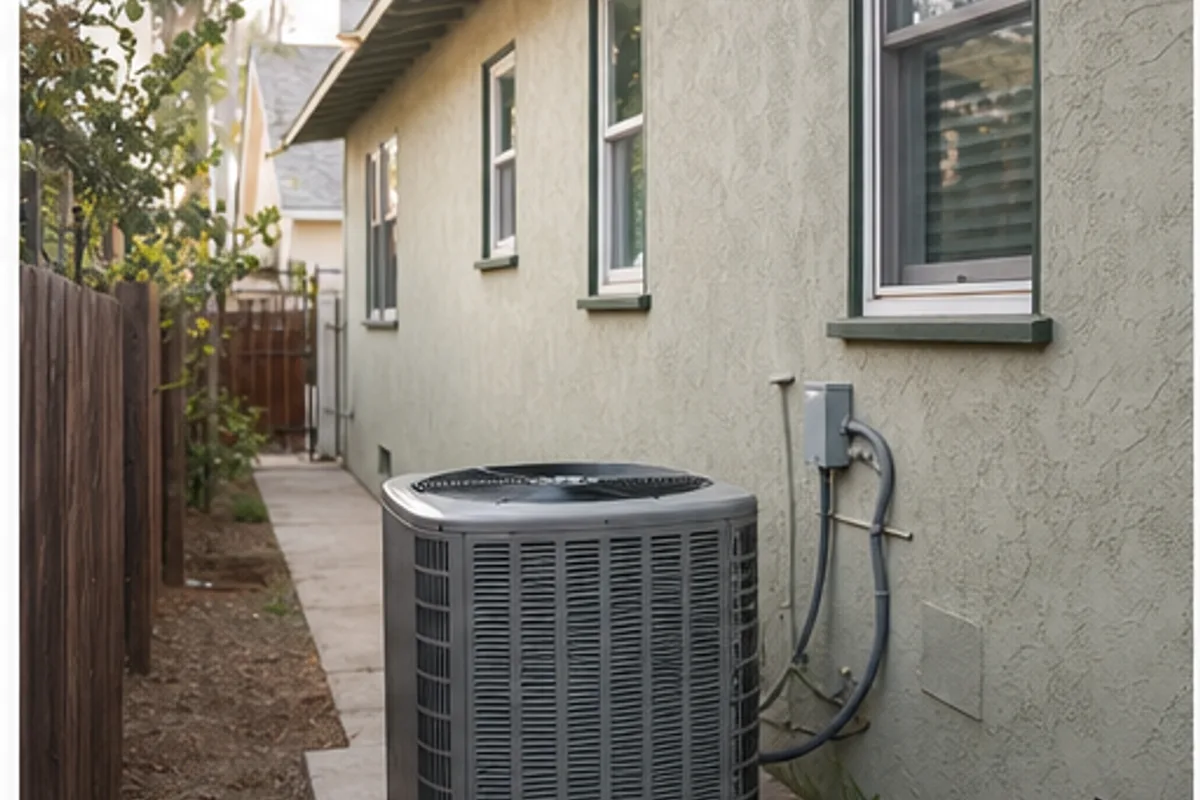
If the problem is active, unsafe, wet, hot, sparking, backing up, not cooling, not heating, or producing gas-appliance concerns, book the visit and include photos immediately. If it is not urgent, use this page to decide what needs to be checked before a technician prices the work.
The two things that most often change the job are the local home profile and the service-specific risk. In Azusa, the local profile is postwar homes, rentals, and additions with garage equipment, long side yards, and older supply piping. For emergency HVAC, the risk is that emergency HVAC often overlaps with electrical breakers, clogged condensate drains, gas shutoff, or water damage.
For HVAC work, the lowest-risk quote separates the failed part from airflow, condensate, controls, electrical support, and equipment placement. That matters in older basin homes because ducts and electrical circuits were often added decades after the structure was built. In Azusa, that trade lens has to be merged with City building authority or local utility context by address, SCE or local electric by address with SoCalGas and water-provider variation, and the local access pattern: garage equipment, long side yards, and older supply piping.
Do not let the visit become a box-swap conversation before airflow, condensate, controls, and electrical support are checked. For emergency HVAC, the first evidence should cover shutoff safety, breaker status, condensate overflow. The planning range on this site is $240 to $2 600, but that number is only useful after access, existing system age, permit path, and related-trade dependencies are documented.
For emergency HVAC in Azusa, the first goal is stabilization: protect occupants, identify unsafe heating or cooling symptoms, and decide whether the system should keep running. The visit should separate no-cooling triage, no-heat safety, water near equipment, burning odors, frozen coils, and repeated breaker trips before replacement is discussed.
The practical goal is to decide whether the first visit is a repair visit, a replacement estimate, an emergency stabilization, or a retrofit-readiness check. That choice affects parts, ladders, drain equipment, panel tools, camera gear, documentation, and whether work should stay open for inspection.
Era and stock: Azusa incorporated in 1898 at the mouth of the San Gabriel Canyon, with a small downtown core of pre-1920 commercial and residential structures along Azusa Avenue. The dominant housing layer is 1950 to 1968 postwar tract construction filling the flats, with significant 1990s and 2000s master-planned development at Rosedale on the former Monrovia Nursery site.
Housing mix: Postwar ranches of 1,100 to 1,600 square feet on 6,500 to 8,000 square foot lots through the older grid, with newer 2,200 to 3,000 square foot two-story production homes in Rosedale. Typical retrofit candidate is a 1958 ranch upgrading from wall furnace and window units to a full heat-pump system.
Streets and landmarks: Azusa Avenue runs north into San Gabriel Canyon toward the East and West Forks and Crystal Lake, while Foothill Boulevard carries Route 66 traffic east-west. Citrus Avenue defines the eastern boundary near Azusa Pacific University, and the Gold Line terminus anchors the downtown end of Alameda Avenue.
What drives most retrofits here: Canyon-mouth siting means the city catches strong downcanyon wind events that load filters and stress condenser fans, and water hardness sits 18 to 22 grains across most of the older grid. The Rosedale homes arrived with builder-grade 80 percent furnaces that are now hitting end of life, driving a steady stream of high-efficiency heat-pump conversions paired with panel upgrades.
Permit gotcha for Azusa: Azusa Building Division shares plan-check capacity with a contract third-party reviewer, so submittal calendars matter and turnaround swings between one and four weeks. HVAC changeouts in the Rosedale tract require HOA architectural review in addition to the city permit, which surprises homeowners every time.
This stack is why the page is not a doorway page. A emergency HVAC visit in Azusa has a different access, utility, permit, housing, and failure-mode profile than the same service in a coastal condo, Valley ranch home, or Westside estate canyon.
The most expensive mistake is approving a narrow repair before the surrounding constraint is understood. A component can be replaced while airflow stays bad, a fixture can be installed while the shutoff is failing, a charger can be mounted before the panel is ready, or a drain can be cleared while a broken lateral remains undocumented.
For emergency HVAC in Azusa, our first-pass checklist is shutoff safety, breaker status, condensate overflow, filter and airflow, symptom photos. That list is short enough to use during booking and specific enough to prevent most blind quotes.
The authority starting point for Azusa is City building authority or local utility context by address. Utility context is SCE or local electric by address with SoCalGas and water-provider variation. Depending on scope, the work may need a permit, plan review, utility service planning, rebate paperwork, HERS or energy-code documentation, or a final inspection. LADBS notes that work is not approved until inspected and accepted, and that covered or concealed work may need to remain visible.
That matters for homeowners because a cheaper visit can become expensive if drywall, stucco, trench, conduit, venting, or piping is closed before the right inspection stage.
| Driver | Why it matters locally | Homeowner action |
|---|---|---|
| Access | garage equipment, long side yards, and older supply piping can increase setup time, ladder needs, parking coordination, or equipment route difficulty. | Send photos before booking and clear the path. |
| Existing system age | postwar homes, rentals, and additions often means mixed-era equipment, pipes, ducts, and wiring. | Send model labels and prior repair history. |
| Utility and permit path | SCE or local electric by address with SoCalGas and water-provider variation and City building authority or local utility context by address influence sequence and documentation. | Ask whether the work is repair, replacement, or upgrade. |
| Service-specific risk | emergency HVAC often overlaps with electrical breakers, clogged condensate drains, gas shutoff, or water damage. | Approve diagnosis before approving a large replacement. |
Planning range for emergency HVAC: $240 to $2 600. This is not a guaranteed price; it is a useful starting range before access, condition, permits, and related trade needs are confirmed.
Call or book immediately if there is active leaking, sewage backup, burning odor, sparking, wet electrical equipment, no cooling during heat, no heat with a safety concern, repeated breaker trips, a gas smell, visible smoke, or water spreading into finished rooms. If natural gas is suspected, leave the area and follow utility emergency instructions from a safe location.
If the system works but is old, inefficient, noisy, undersized, or incompatible with a planned EV charger, heat pump, ADU, repipe, or remodel, use a retrofit check. Planned sequencing usually costs less than emergency replacement because panel, pipe, duct, venting, and permit issues can be solved before demolition or equipment ordering.
Each review is also emitted in the page JSON-LD with a 1:1 match between visible and structured-data text. Author names use first name and last initial only, and ratings reflect the actual review (some 4-star reviews are included where homeowners flagged a real complaint that was resolved).
Sewer collapse on a 1942 home off Cypress Ave. 35 ft trench, ABS replacement, two-way cleanout added. The trade-cross was that the sump receptacle had been wet for months and the GFCI was failing daily, the plumbers flagged it for the electricians on the same crew. Star off because the trench backfill settled about 2 inches over the next month and they had to come back and top it up. They did, no charge.
Generac 22kW air-cooled standby with an automatic transfer switch. Crew coordinated the gas supply with the plumbing team in-house, which made the schedule a lot easier. NEC 110.26 working clearance was respected and the concrete pad placement was thoughtful. Self-test runs Wednesday morning, neighbors haven't complained.
Gas furnace in our Garfield Heights house was on borrowed time. Talia ran the numbers on a dual fuel option and a straight heat pump, then was honest that for our envelope a 3-ton SEER2 17 heat pump with HSPF2 8.5 made more sense than keeping gas. SCE Charge Ready Home rebate qualifying paperwork was filed by their office. AHRI directory match printed on the invoice.
Azusa Building Division shares plan-check capacity with a contract third-party reviewer, so submittal calendars matter and turnaround swings between one and four weeks. HVAC changeouts in the Rosedale tract require HOA architectural review in addition to the city permit, which surprises homeowners every time. For emergency HVAC specifically, equipment replacement, new circuits, repiping, panel work, water-heater replacement, and concealed work commonly need permit or inspection planning. City building authority or local utility context by address is the starting point.
Postwar ranches of 1,100 to 1,600 square feet on 6,500 to 8,000 square foot lots through the older grid, with newer 2,200 to 3,000 square foot two-story production homes in Rosedale. Typical retrofit candidate is a 1958 ranch upgrading from wall furnace and window units to a full heat-pump system. Canyon-mouth siting means the city catches strong downcanyon wind events that load filters and stress condenser fans, and water hardness sits 18 to 22 grains across most of the older grid. The Rosedale homes arrived with builder-grade 80 percent furnaces that are now hitting end of life, driving a steady stream of high-efficiency heat-pump conversions paired with panel upgrades.
Send photos of the equipment, panel, shutoff, access path, symptom, model labels, and any previous repair notes. For Azusa, include parking, alley, crawlspace, attic, garage, or HOA constraints because garage equipment, long side yards, and older supply piping can change the dispatch plan.
Azusa Avenue runs north into San Gabriel Canyon toward the East and West Forks and Crystal Lake, while Foothill Boulevard carries Route 66 traffic east-west. Citrus Avenue defines the eastern boundary near Azusa Pacific University, and the Gold Line terminus anchors the downtown end of Alameda Avenue. Note any cross-streets, gated communities, alley cleanouts, or hillside constraints in the booking note so the technician arrives ready for the actual route, not a curb-only assumption.
Yes. The site is built around air, power, and water coordination. A hvac visit can also note visible panel, pipe, drain, shutoff, duct, water-heater, or condensate issues that should be considered before a larger upgrade.
Send the symptom, equipment photos, panel photo, shutoff location, access constraints, and urgency. The booking path stays external so there is no fake form and no invented phone number.