Air-system data points
- return-air path and filter-rack fit
- condenser clearance and disconnect condition
- condensate route and overflow evidence
- duct static, leakage, and register balance clues
- thermostat wiring and heat-pump control readiness
Quick answer: Circuit & Cistern LA provides heat pump installation in Hacienda Heights with a retrofit-first check of the symptom, access, utility context, permit path, and related air, power, or water systems.
For this page, the service promise is practical: plan heating and cooling electrification with panel capacity, duct condition, utility rebate documentation, and permit path in mind. The local reason is equally important: Hacienda Heights sits in the SGV basin and hill edge, where larger homes, hillside-edge streets, and additions and slopes, long duct runs, and garage panels can change labor, timing, and inspection readiness.
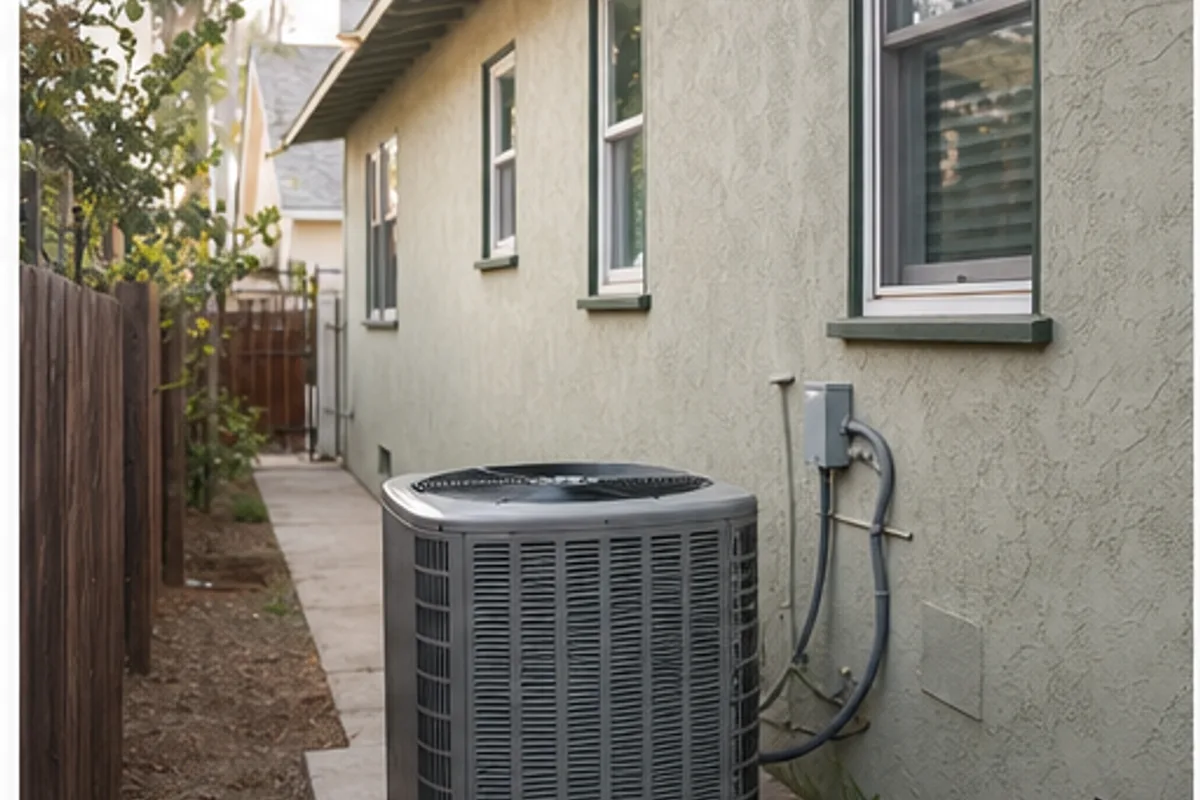
If the problem is active, unsafe, wet, hot, sparking, backing up, not cooling, not heating, or producing gas-appliance concerns, book the visit and include photos immediately. If it is not urgent, use this page to decide what needs to be checked before a technician prices the work.
The two things that most often change the job are the local home profile and the service-specific risk. In Hacienda Heights, the local profile is larger homes, hillside-edge streets, and additions with slopes, long duct runs, and garage panels. For heat pump installation, the risk is that heat-pump projects can stall when panel load, duct leakage, thermostat wiring, or water-heater electrification plans are ignored.
For HVAC work, the lowest-risk quote separates the failed part from airflow, condensate, controls, electrical support, and equipment placement. That matters in older basin homes because ducts and electrical circuits were often added decades after the structure was built. In Hacienda Heights, that trade lens has to be merged with LA County Building and Safety by address, SCE and SoCalGas with local water-provider context, and the local access pattern: slopes, long duct runs, and garage panels.
Do not let the visit become a box-swap conversation before airflow, condensate, controls, and electrical support are checked. For heat pump installation, the first evidence should cover panel load snapshot, equipment match, duct and return sizing. The planning range on this site is $9 800 to $26 000, but that number is only useful after access, existing system age, permit path, and related-trade dependencies are documented.
For heat pump installation in Hacienda Heights, the planning question is whether the home can support electrified heating without creating a panel, duct, thermostat, or comfort problem. The right scope checks load assumptions, outdoor placement, condensate, backup heat strategy, and any utility or rebate paperwork before demolition starts.
The practical goal is to decide whether the first visit is a repair visit, a replacement estimate, an emergency stabilization, or a retrofit-readiness check. That choice affects parts, ladders, drain equipment, panel tools, camera gear, documentation, and whether work should stay open for inspection.
Era and stock: Hacienda Heights is unincorporated LA County and developed primarily between 1962 and 1978 as a master-planned hillside community on former Rowland Ranch land. Custom hillside construction continued through the 1980s and 1990s on view lots above Hacienda Boulevard, and the area never incorporated, so all construction history runs through County records.
Housing mix: Hillside ranches and split-levels of 1,800 to 2,800 square feet on 8,000 to 14,000 square foot lots dominate, with larger 1990s customs on cul-de-sacs above Stoner Creek. Typical retrofit candidate is a 1970s split-level with original electric resistance heat or a long-retired heat pump that needs a full system replacement.
Streets and landmarks: Hacienda Boulevard runs the spine from the 60 Freeway up to the Hsi Lai Buddhist Temple, one of the largest in the western hemisphere. Colima Road carries the southern east-west traffic, Turnbull Canyon Road climbs into the Puente Hills preserve, and Stoner Creek and Schabarum Park anchor the recreational map.
What drives most retrofits here: Hillside aspect creates severe west-facing solar load and frequent attic temperatures above 140 degrees in summer, while many original 1970s electric-furnace homes are converting to heat pumps as their service lives end. Water at 14 to 18 grains is on the softer end of the SGV foothill range, but Puente Hills wildfire exposure drives demand for ember-resistant attic and HVAC penetration upgrades.
Permit gotcha for Hacienda Heights: Permits route through LA County Building and Safety at the Industry or San Dimas district office, and any parcel inside the Very High Fire Hazard Severity Zone above Colima requires Fire Department clearance on exterior mechanical placements. The Express Permit pathway covers like-for-like swaps but excludes anything touching attic ventilation in the fire zone.
This stack is why the page is not a doorway page. A heat pump installation visit in Hacienda Heights has a different access, utility, permit, housing, and failure-mode profile than the same service in a coastal condo, Valley ranch home, or Westside estate canyon.
The most expensive mistake is approving a narrow repair before the surrounding constraint is understood. A component can be replaced while airflow stays bad, a fixture can be installed while the shutoff is failing, a charger can be mounted before the panel is ready, or a drain can be cleared while a broken lateral remains undocumented.
For heat pump installation in Hacienda Heights, our first-pass checklist is panel load snapshot, equipment match, duct and return sizing, rebate documents, backup heat strategy. That list is short enough to use during booking and specific enough to prevent most blind quotes.
The authority starting point for Hacienda Heights is LA County Building and Safety by address. Utility context is SCE and SoCalGas with local water-provider context. Depending on scope, the work may need a permit, plan review, utility service planning, rebate paperwork, HERS or energy-code documentation, or a final inspection. LADBS notes that work is not approved until inspected and accepted, and that covered or concealed work may need to remain visible.
That matters for homeowners because a cheaper visit can become expensive if drywall, stucco, trench, conduit, venting, or piping is closed before the right inspection stage.
| Driver | Why it matters locally | Homeowner action |
|---|---|---|
| Access | slopes, long duct runs, and garage panels can increase setup time, ladder needs, parking coordination, or equipment route difficulty. | Send photos before booking and clear the path. |
| Existing system age | larger homes, hillside-edge streets, and additions often means mixed-era equipment, pipes, ducts, and wiring. | Send model labels and prior repair history. |
| Utility and permit path | SCE and SoCalGas with local water-provider context and LA County Building and Safety by address influence sequence and documentation. | Ask whether the work is repair, replacement, or upgrade. |
| Service-specific risk | heat-pump projects can stall when panel load, duct leakage, thermostat wiring, or water-heater electrification plans are ignored. | Approve diagnosis before approving a large replacement. |
Planning range for heat pump installation: $9 800 to $26 000. This is not a guaranteed price; it is a useful starting range before access, condition, permits, and related trade needs are confirmed.
Call or book immediately if there is active leaking, sewage backup, burning odor, sparking, wet electrical equipment, no cooling during heat, no heat with a safety concern, repeated breaker trips, a gas smell, visible smoke, or water spreading into finished rooms. If natural gas is suspected, leave the area and follow utility emergency instructions from a safe location.
If the system works but is old, inefficient, noisy, undersized, or incompatible with a planned EV charger, heat pump, ADU, repipe, or remodel, use a retrofit check. Planned sequencing usually costs less than emergency replacement because panel, pipe, duct, venting, and permit issues can be solved before demolition or equipment ordering.
Each review is also emitted in the page JSON-LD with a 1:1 match between visible and structured-data text. Author names use first name and last initial only, and ratings reflect the actual review (some 4-star reviews are included where homeowners flagged a real complaint that was resolved).
Wall-mount Navien NPE-240A2 on the side of the garage with a recirc kit and a Taco D'MAND Kontrols pump on the return loop. Gas pressure verified, vent and intake spaced per manufacturer, condensate neutralizer in line before the laundry standpipe. SoCalGas 200 cfh tankless retrofit calculation was on the invoice, which I appreciated for the records. Talia explained annual flushes.
Lost all hot water on a cold morning. The thermocouple on the old tank had failed and the gas valve was shot. Tech got it firing again temporarily so we had hot water that night, then came back two days later to install the new Bradford White RG250T6N as scheduled rather than rush a panic install. Honest sequencing.
Three new shutoffs, a Toto Drake CST744EFG, and a kitchen disposal in one visit. They tested every shutoff before leaving and replaced the ones that were the original multi-turn type with quarter-turns. Disposal wired to the existing switched outlet, tail piece corrected to a proper high loop per CPC §807.4 air gap. No leaks at any joint after a 30-minute pressure soak.
Permits route through LA County Building and Safety at the Industry or San Dimas district office, and any parcel inside the Very High Fire Hazard Severity Zone above Colima requires Fire Department clearance on exterior mechanical placements. The Express Permit pathway covers like-for-like swaps but excludes anything touching attic ventilation in the fire zone. For heat pump installation specifically, equipment replacement, new circuits, repiping, panel work, water-heater replacement, and concealed work commonly need permit or inspection planning. LA County Building and Safety by address is the starting point.
Hillside ranches and split-levels of 1,800 to 2,800 square feet on 8,000 to 14,000 square foot lots dominate, with larger 1990s customs on cul-de-sacs above Stoner Creek. Typical retrofit candidate is a 1970s split-level with original electric resistance heat or a long-retired heat pump that needs a full system replacement. Hillside aspect creates severe west-facing solar load and frequent attic temperatures above 140 degrees in summer, while many original 1970s electric-furnace homes are converting to heat pumps as their service lives end. Water at 14 to 18 grains is on the softer end of the SGV foothill range, but Puente Hills wildfire exposure drives demand for ember-resistant attic and HVAC penetration upgrades.
Send photos of the equipment, panel, shutoff, access path, symptom, model labels, and any previous repair notes. For Hacienda Heights, include parking, alley, crawlspace, attic, garage, or HOA constraints because slopes, long duct runs, and garage panels can change the dispatch plan.
Hacienda Boulevard runs the spine from the 60 Freeway up to the Hsi Lai Buddhist Temple, one of the largest in the western hemisphere. Colima Road carries the southern east-west traffic, Turnbull Canyon Road climbs into the Puente Hills preserve, and Stoner Creek and Schabarum Park anchor the recreational map. Note any cross-streets, gated communities, alley cleanouts, or hillside constraints in the booking note so the technician arrives ready for the actual route, not a curb-only assumption.
Yes. The site is built around air, power, and water coordination. A hvac visit can also note visible panel, pipe, drain, shutoff, duct, water-heater, or condensate issues that should be considered before a larger upgrade.
Send the symptom, equipment photos, panel photo, shutoff location, access constraints, and urgency. The booking path stays external so there is no fake form and no invented phone number.